
Making More Money Made Me Gain 40kg: How I Lost 17kg by Reverse Engineering It
In 2019 I was walking 7 to 8 kilometres every workday, cooking on a tight budget and weighing 73kg. By February 2026 I was earning more than I ever had, driving everywhere, ordering takeaways whenever I felt like it, and weighing 113.2kg. This is the story of how making more money made me gain 40kg, and how I lost 17kg this year by working out what caused the weight gain and reversing it.
Making more money made me gain weight because it bought me convenience. I moved 500m from work, then worked from home, then bought a car, so my walking dropped from about 8km a workday to almost zero. At the same time I swapped budget home cooking for takeaways and Uber Eats. I lost 17kg in 2026 by reversing both: eating under 2,000 calories a day on a plan from a dietitian, and bringing back daily movement with 30 minutes of zone 2 cardio on a walking pad at least five days a week, plus gym three times a week.
- I went from 73kg in April 2019 to 113.2kg in February 2026, a gain of about 40kg as my income grew.
- On a low salary with no car, my commute and lunch break added up to 7 to 8km of walking every workday.
- Moving 500m from work, working from home in 2020 and buying a car in 2021 took my walking to almost zero.
- Higher income also meant more takeaways and Uber Eats, and less cooking on a budget.
- Going back to the gym in 2022 and 2023 never got me more than 4kg down.
- Calorie control (under 2,000 a day) plus 30 minutes of zone 2 cardio five days a week took me from 113.2kg to 96kg between February and October 2026.
▶ Watch the full story, or keep reading below
I'm not a doctor or a dietitian. This is my personal experience, and I worked with a dietitian for my eating plan. Please speak to a qualified professional before you change your diet or exercise routine.
The broke years were my fittest years
When I started my career in 2017 I was earning R6,000 a month, which went up to R9,000 later that year. That isn't much in Cape Town, so a car was out of the question, and so was living close to the office in the CBD. I used public transport, mostly taxis, because the trains had too many delays and I wanted to get to work on time without waking up at the crack of dawn.
Before I started working I'd been bodybuilding, so I started 2017 at around 81 to 82kg, lean and muscular. Once work started, the gym fell away, but something else quietly replaced it, and that was walking.
In 2018 my salary went up to R17,000 and I moved to a better place in Kenilworth, renting one room in a two-bedroom apartment for R4,000. It was still about 12km from work, because I picked it for being close to public transport routes, not close to the office. If you want the full picture of what those early salaries look like, I broke it down in my guide to digital marketing salaries in South Africa.
How far I actually walked every day
On a normal workday I walked 7 to 8km, without ever thinking of it as exercise. Every morning I walked from my place on 3rd Avenue to Claremont to catch a taxi, and when the taxi dropped me at the station deck in town, I walked to the office on Keerom Street. Then I did the whole thing in reverse after work, and added another 1 to 2km on my one-hour lunch break.
| Leg | Distance | Time |
|---|---|---|
| Kenilworth to Claremont (taxi) | 1.8km | About 25 min |
| Cape Town station to Keerom Street | 1.1km | About 16 min |
| One way | 2.9km | About 41 min |
| There and back | 5.8km | About 82 min |
| Lunch break walk | 1–2km | Varied |
| Total per workday | 7–8km | Well over 1.5 hours on my feet |
In 2017 the distance was similar, if not longer. Because I'd stopped lifting and was walking this much every day, I got skinny, and by April 2019 I was down to 73kg. My budget was also tight, so I cooked most of my food to make the money last to the end of the month.
I had a really good fitness setup in place, I just didn't know it was a setup, because it felt like being broke.
How more money took away my walking
In 2019 I got an increase to R25,000, and at the end of that year I landed a new job paying R30,000 a month. I still didn't have a car, but now I could afford to live close to work, so I moved into a place about 500m from the office. My whole commute, there and back, went from 7 or 8km to 1km.
That's exactly when the weight started coming back, after a couple of years of losing it, and I didn't connect the two at the time.
Then lockdown hit in 2020 and I started working from home and consulting, which took my walking to basically zero. That year is also when my online business really started, which I wrote about in how I started an online business in South Africa using SEO. In 2021 I bought my car, so even when I did leave the house, I wasn't walking to a taxi rank or a train station anymore.
The food changed too
When I had less money I had to cook, because cooking made the budget go further. As my income grew, I ordered more and more takeaways and Uber Eats, and by 2021 I could pretty much eat whatever I wanted in South Africa without thinking about the cost.
On R9,000 a month
No car, 7 to 8km of walking a day, home-cooked meals to stretch the budget, 73 to 82kg.
Once the money came
A car, working from home, takeaways and Uber Eats whenever I wanted, up to 113.2kg.
One of the first things money buys you is convenience, and convenience is very good at making you move less and eat more.
My weight gain, year by year
Once the walking stopped, the scale climbed steadily for six years.
| Date | Weight | What was happening |
|---|---|---|
| Early 2017 | 81–82kg | Lean and muscular from bodybuilding, starting my first job |
| April 2019 | 73kg | Walking 7–8km a workday, cooking on a budget |
| Late 2019 | Gaining | New job, living 500m from the office |
| February 2021 | 91kg | Working from home, bought a car |
| June 2022 | 98kg | Short-lived gym attempt |
| October 2024 | 106kg | Reflux, snoring and poor sleep had started |
| February 2026 | 113.2kg | My friend's wedding, the wake-up call |
| October 2026 | 96kg | 17.2kg down after reverse engineering the weight gain |
What the extra weight did to me
In 2023, around the time I went past 104kg, I started having health problems I'd never had before. I developed GERD, which is acid reflux, and as I got bigger I started snoring for the first time in my life. My stomach stuck out and felt uncomfortable most of the time, and I was always tired and struggled to get good sleep, no matter how early I went to bed.
The wedding that changed everything
The moment it really hit me was at my friend's wedding on Valentine's Day 2026. Before the wedding I tried on the suit I'd bought in 2022 for another friend's wedding, and it didn't fit anymore, and neither did the white shirt I'd bought with it. So I went to the mall to find something new, and I struggled to find my size or anything that actually fit properly.
After the wedding I saw the photos and videos, and I didn't recognise myself. My face was bloated, my stomach was bloated, and I just looked heavy. Even my family started telling me I was getting a bit too big, and in a Black South African family that's saying something, because being big is usually seen as a sign that life is good. When your own family says it's too much, you listen.
Why going back to the gym didn't work
I did try to fix it before. In 2022 and again in 2023 I went back to the gym, but I never lost more than about 4kg. Each time I either lost motivation or got injured, because I went back to lifting too heavy, too soon, as if I was still the 82kg guy from 2017.
The problem was that the gym was never what made me gain weight in the first place. I didn't gain 40kg because I stopped lifting, I gained it because I lost 8km of walking a day and gained the ability to eat whatever I wanted. Training hard didn't touch either of those.
How I lost 17kg by reverse engineering my weight gain What worked
This time I started by asking what actually caused the weight gain, and laying it out made the answer obvious. I went from walking 8km a day and cooking on a budget to walking almost nothing and eating whatever I felt like. So the fix had two parts, eat less and move more, in that order.
Part 1: Fix the food first
Biggest impact · most consistent results
- Count calories and stay under 2,000 a day. This was the target that worked for me, and it was the single most consistent driver of my results.
- Cut breakfast at first. In the beginning I only ate lunch and supper, which made staying under my number much easier.
- Stop buying snacks. If it wasn't in the house, I couldn't eat it. The only snacks I allowed were nuts and biltong.
- See a dietitian. Once the habit was in place, a dietitian gave me a proper eating plan, and I followed it while still tracking my calories.
Part 2: Bring back the walking I'd lost
Adds to the results · rebuilds what money took away
I already had an indoor bike I'd bought in 2024, and I bought a walking pad specifically to bring back the daily walking I used to do without thinking about it. My target was at least 30 minutes of zone 2 cardio at least five days a week, mostly walking on an incline. Zone 2 is steady effort where you're working but can still hold a conversation.
I also had dumbbells, a barbell, a bench and bands at home plus a gym membership, so for the first few months I trained at the gym three times a week. This time I eased into it instead of trying to lift like I did eight years ago.
Track calories and stay under 2,000.
No snacks in the house except nuts and biltong.
30 minutes of zone 2 on the incline walking pad or bike.
Resistance training at the gym, building up gradually.
The result
Between February and October 2026 I went from 113.2kg to 96kg, a loss of 17.2kg. Calorie control did the heavy lifting and delivered results consistently, but the more exercise I added on top of it, the faster the weight came off. Exercise without fixing the food is what I tried in 2022 and 2023, and that got me 4kg and an injury.
What didn't work (2022–2023)
Jumping straight back into heavy lifting without changing what I ate. Never more than 4kg lost, then injury or lost motivation.
What worked (2026)
Fixing calories first, then rebuilding daily walking and easing into weights. 17.2kg lost in eight months.
The lesson: what money buys you, and what it takes away
This is exactly how I approach my work. In SEO, when a website's traffic drops, you don't just publish random content and hope it comes back. You find what changed, work out the cause and reverse it. My weight was no different, and once I treated it like a traffic drop instead of a willpower problem, it started coming off.
If you're early in your career, walking everywhere and cooking on a budget, you're probably healthier than you'll be when the money comes. When it does come, be intentional about what you let it buy you. Enjoy the convenience, but replace what it takes away, whether that's a walking pad, walking to the shops or cooking a few nights a week.
If you've spotted the house in the video, that story is coming next. In the meantime, here's how the money side happened: how I made my first million online in South Africa.
Build the income, without losing the walk
The business that changed my lifestyle is built on SEO, and it's what I teach inside Rank to Earn: how to build websites that rank on search and earn in dollars from South Africa.
The One-Pager Strategy
- The exact steps I use to launch a monetised page fast
- A focused first project you can run alongside your job
- No big budget needed
The Full System
- Become a website operator and run sites as a real business
- The full system I've built and refined over years
- For when you're serious about earning in dollars from SA
Want to compare everything first? See all Rank to Earn courses. New to this space? Start with how to get into digital marketing in South Africa without a degree.
Summary: how making more money made me gain weight
Making more money made me gain about 40kg because it removed the activity and budget limits that kept me lean. On a low salary I walked 7 to 8km every workday and cooked to save money. As my income grew I moved close to work, then worked from home, then bought a car, and swapped home cooking for takeaways. Going back to the gym never got me more than 4kg down. What worked was reversing the causes: eating under 2,000 calories a day on a dietitian's plan and bringing back 30 minutes of zone 2 walking at least five days a week, which took me from 113.2kg to 96kg in 2026.
Get more traffic from social media: grab my free guide
Subscribe to my email list and I'll send you honest breakdowns like this one, the tactics actually working right now, and your free copy of The Borrowed Playbook: how to borrow the social media strategies already working for other products and use them to send traffic to yours, with little to no money.
- How to borrow social media strategies that already work
- Real case studies and playbooks straight to your inbox
- The free Borrowed Playbook starter guide, sent right away
You'll join my newsletter where I share what's actually working. Unsubscribe anytime.
You're in. Now check your inbox.
I've just sent an email to your inbox. Open it to grab your Borrowed Playbook. If it asks you to confirm your subscription first, click the button and the guide follows right after.
- Can't see it? Check your Promotions or Spam tab and mark it "not spam".
- Add me to your contacts so the next breakdowns land in your inbox.
Frequently asked questions
How did making more money make you gain weight?
More money bought me convenience. I moved 500m from work, then worked from home, then bought a car, so my walking dropped from 7 to 8km a workday to almost nothing. I also replaced budget home cooking with takeaways and Uber Eats, and went from 73kg in 2019 to 113.2kg in 2026.
How did you lose 17kg?
I reversed what caused the weight gain. I counted calories and stayed under 2,000 a day, stopped buying snacks, followed a plan from a dietitian, and did at least 30 minutes of zone 2 cardio on a walking pad or bike five days a week, plus gym three times a week. I went from 113.2kg to 96kg between February and October 2026.
Is diet or exercise more important for losing weight?
In my experience, calorie control was more consistent and made the biggest difference. Going back to the gym on its own in 2022 and 2023 never got me more than 4kg down. Once my calories were under control, adding more exercise helped me lose weight faster.
What is zone 2 cardio?
Zone 2 cardio is steady, moderate exercise where you're working but can still hold a conversation. I did mine mostly as incline walking on a walking pad, for at least 30 minutes a day, at least five days a week.
How far did you walk every day before you gained weight?
About 7 to 8km every workday. My commute from Kenilworth involved walking 1.8km to Claremont for a taxi and 1.1km from Cape Town station to the office, twice a day, plus 1 to 2km during my lunch break.
Is a walking pad worth it for weight loss?
For me it was, because it brought back the daily walking I lost when I started working from home and driving. It made it easy to fit in 30 minutes of incline walking at least five days a week without leaving the house.
Why does lifestyle inflation lead to weight gain?
When income rises, people often spend it on convenience such as cars, living closer to work and food delivery. Each of those can reduce daily movement or increase how much you eat, and together they can cause steady weight gain over years without you noticing.
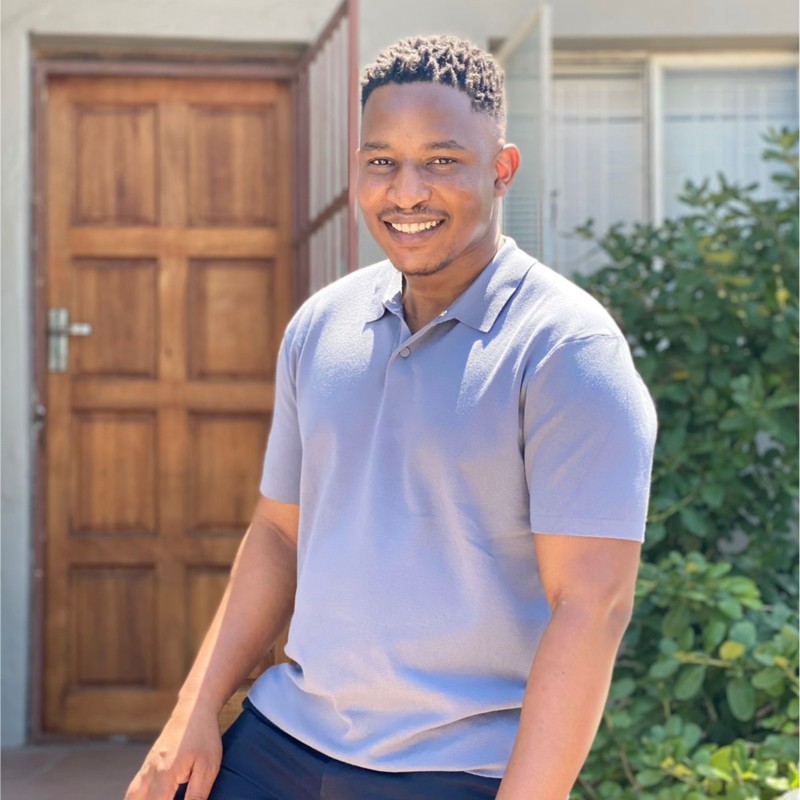
About Eugene Madondo
Eugene is a Cape Town-based SEO specialist and digital entrepreneur who has been earning online since 2012. He started his career on R6,000 a month in 2017, worked in SEO at a tech startup, an agency and in-house tech roles, ran a consulting business, and has generated over $1.4 million from his own affiliate websites since 2020. He teaches website operators through Rank to Earn. Read how he made his first million online.
I'm at 96kg now and still going, and I'll keep sharing the journey. If this story sounds familiar, start by asking what changed in your life when the weight came on, and reverse that first.